Hospital Supplies
Full-scale medical equipment solutions for modern clinical environments.
FREE SHIPPING
ON ORDERS OVER 100kSupporting Kenya’s healthcare and science sectors withprecision laboratory equipment, high-purity reagents, and diagnostic tools. From Nairobi-based clinics to regional research labs, we deliver excellence.
Full-scale medical equipment solutions for modern clinical environments.
Advanced diagnostic tools and lab machinery for accurate results.
ISO-certified laboratory reagents for schools and industrial research.
Mobility aids and patient monitoring devices for professional home-based care.
Everything you need to know about our medical and laboratory supply services in Kenya.
Yes. All our medical devices, laboratory reagents, and hospital consumables are fully vetted and registered by the Pharmacy and Poisons Board (PPB) of Kenya to guarantee clinical safety and compliance.
Yes, we offer fast and secure nationwide delivery. We supply county hospitals, private clinics, and pharmacies across Nairobi, Mombasa, Kisumu, Eldoret, and all other regions, including temperature-controlled logistics for sensitive reagents.
We stock a comprehensive range of healthcare products, including ICU hospital beds, surgical instruments, diagnostic imaging machines (ultrasound, X-ray), laboratory consumables, and everyday medical disposables.
Absolutely. We accept Local Purchase Orders (LPOs) from registered hospitals, NGOs, and research institutions. We provide competitive wholesale pricing, tender support, and flexible credit terms for bulk procurement.
Yes. Our in-house team of certified biomedical engineers handles the installation, calibration, and preventive maintenance of all lab and clinical machinery we sell, backed by standard manufacturer warranties.
Yes, alongside our corporate medical supplies, we sell home-care equipment such as oxygen concentrators, blood pressure monitors, glucometers, and wheelchairs directly to patients and caregivers.
Equipping a new clinic or hospital in Kenya? Contact us for specialized wholesale quotes and dedicated logistics support.
Serving all 47 Counties
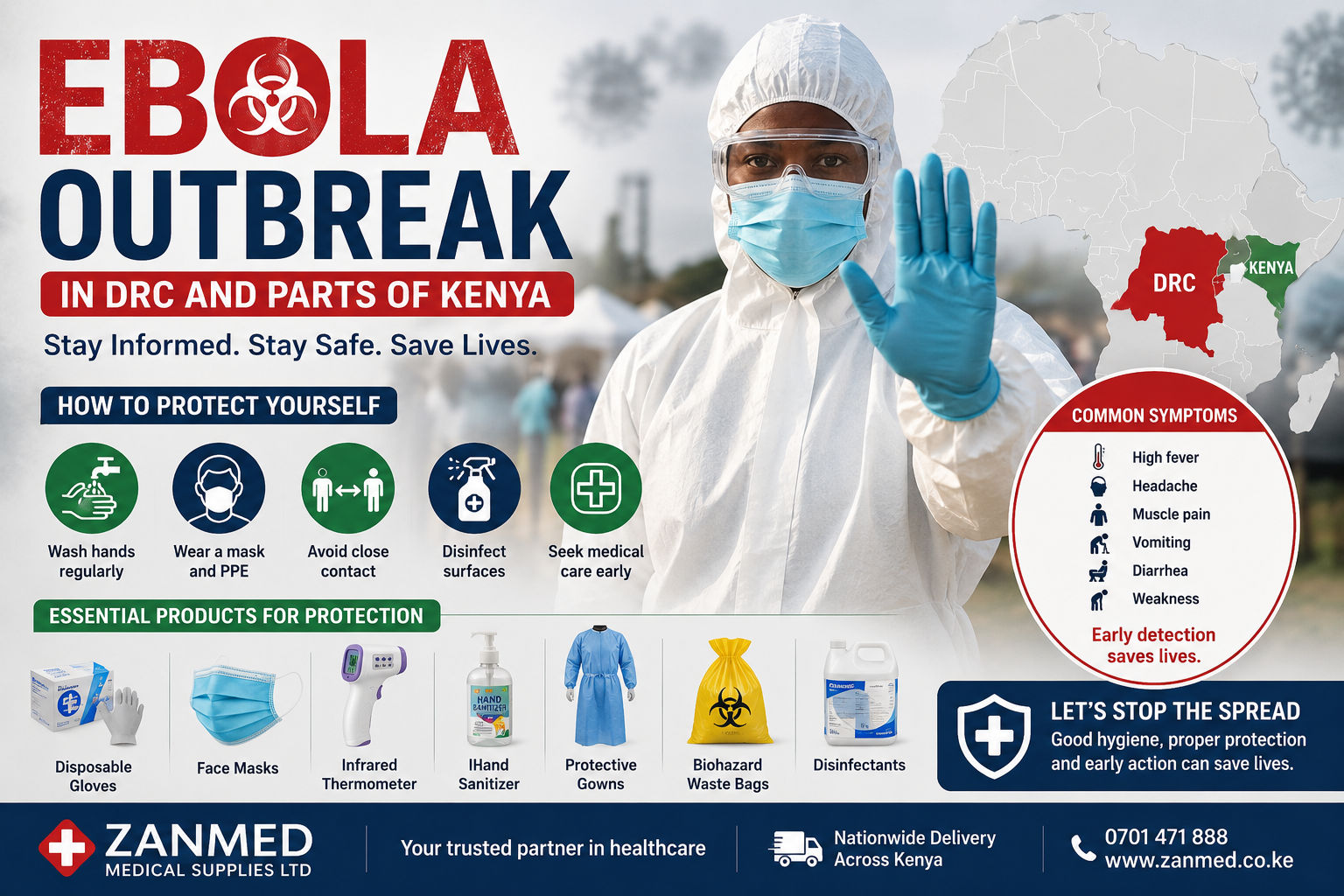
Learn how to protect yourself and your family during the reported Ebola outbreak affecting parts of DRC and East Africa. Discover symptoms, prevention tips, and essential medical supplies.
Understanding the Current Ebola Situation in East Africa
Health authorities and the World Health Organization (WHO) have raised concern over a rapidly spreading Ebola outbreak in parts of the Democratic Republic of Congo (DRC), with increased regional surveillance across East Africa due to cross-border movement and trade. WHO has classified the outbreak as a Public Health Emergency of International Concern (PHEIC).
The current outbreak involves the Bundibugyo strain of Ebola virus, a rare strain for which there is currently no approved vaccine or specific treatment.
While Kenya has not reported widespread confirmed transmission, health authorities remain on high alert, especially in border regions and major transit points due to regional travel connections.
This makes public awareness, hygiene, infection prevention, and preparedness extremely important.
What is Ebola Virus Disease?
Ebola Virus Disease (EVD) is a severe and often fatal viral illness transmitted through direct contact with infected bodily fluids, contaminated surfaces, or infected animals.
The disease spreads rapidly in communities and healthcare settings when infection prevention measures are not followed.
Common Symptoms of Ebola
Symptoms may appear between 2 and 21 days after exposure and often begin suddenly.
Common symptoms include:
High fever
Severe weakness and fatigue
Headache
Muscle and joint pain
Vomiting and diarrhea
Stomach pain
Unexplained bleeding or bruising in severe cases
Anyone experiencing symptoms after travel to affected areas or contact with infected individuals should seek immediate medical attention.
How Ebola Spreads
Ebola spreads through:
Direct contact with blood or body fluids of infected persons
Contact with contaminated medical equipment or surfaces
Unsafe handling of infected bodies during burial practices
Exposure to infected wildlife
Healthcare workers and caregivers are among the highest-risk groups without proper protective equipment.
How to Protect Yourself and Your Family
Frequent Hand Hygiene
Wash hands regularly using soap and clean water or alcohol-based sanitizers.
Avoid Contact with Bodily Fluids
Do not handle blood, vomit, or other body fluids without protective equipment.
Use Personal Protective Equipment (PPE)
Gloves, face masks, gowns, and protective eyewear reduce infection risk in healthcare and caregiving environments.
Disinfect Frequently Touched Surfaces
Regular cleaning with approved disinfectants helps reduce contamination.
Avoid Unnecessary Travel to High-Risk Areas
Follow official public health advisories and outbreak updates.
Seek Medical Attention Early
Early isolation and supportive care significantly improve outcomes and reduce transmission.
Essential Medical Supplies for Ebola Prevention
At Zanmed Medical Supplies Ltd, we encourage proper preparedness and infection prevention through reliable medical supplies.
Recommended products include:
Protective Gloves
Disposable examination gloves help reduce direct contact with contaminated fluids.
Face Masks and Respirators
Medical masks provide an additional barrier against exposure.
Infrared Thermometers
Essential for quick, non-contact temperature screening in homes, clinics, schools, and workplaces.
Hand Sanitizers and Disinfectants
Alcohol-based sanitizers and approved disinfectants help maintain hygiene and surface safety.
Protective Gowns and Aprons
Used by caregivers and healthcare workers during patient handling.
Biohazard Waste Bags
Important for safe disposal of contaminated materials.
Digital Blood Pressure Monitors and Pulse Oximeters
Useful for monitoring patients in home care or isolation settings.
Why Infection Prevention Matters
One of the biggest challenges during Ebola outbreaks is delayed detection and poor infection control practices. WHO reports that healthcare settings and unsafe burials have contributed significantly to transmission in previous outbreaks.
Proper hygiene, protective equipment, and early awareness are critical in reducing spread.
Preparedness for Clinics and Healthcare Facilities in Kenya
Healthcare facilities should strengthen:
Infection prevention and control (IPC) protocols
Availability of PPE supplies
Temperature screening procedures
Isolation preparedness
Staff training and awareness
Clinics and laboratories should also maintain adequate disinfectants, waste management systems, and emergency response procedures.
Avoid Panic and Follow Verified Information
Although the outbreak situation is serious, public health experts emphasize the importance of relying on verified information from the Ministry of Health and WHO rather than rumors or misinformation.
Community cooperation and early reporting remain essential in preventing wider spread.
Why Buy Protective Medical Supplies from Zanmed Medical Supplies Ltd?
Zanmed Medical Supplies Ltd supplies reliable medical and infection prevention products for homes, clinics, laboratories, schools, and healthcare facilities across Kenya.
We provide quality PPE, thermometers, sanitizers, gloves, masks, and other essential healthcare products to support preparedness and safety.
Frequently Asked Questions
Is Ebola currently in Kenya?
Kenya remains on high alert due to regional risks and cross-border movement, but official public health updates should be followed for confirmed information.
Can Ebola be prevented?
Yes. Proper hygiene, PPE use, infection control, and avoiding direct exposure significantly reduce risk.
What products help protect against Ebola?
Gloves, masks, sanitizers, disinfectants, thermometers, and protective clothing are important for prevention.
Who is at highest risk?
Healthcare workers, caregivers, close contacts of infected individuals, and travelers to affected areas are at higher risk.
Conclusion: Awareness and Prevention Save Lives
The reported Ebola outbreak in DRC and regional concerns across East Africa highlight the importance of preparedness, hygiene, and infection prevention.
By staying informed, practicing proper hygiene, and using the right protective medical supplies, individuals and healthcare facilities can significantly reduce infection risks.
For quality infection prevention products and medical supplies in Kenya, contact Zanmed Medical Supplies Ltd today and stay prepared with trusted healthcare solutions.
Share This Article
Ngumi is a healthcare industry expert with over 10 years of experience in medical supply distribution. Their insights help healthcare facilities optimize their procurement strategies.
Subscribe for the latest medical supply insights.