
Laboratory Starter Kits in Kenya: Essential Equipment, Costs & Setup Guide (2026)
Planning to set up a medical laboratory in Kenya? Essential kits, equipment lists, pricing and setup tips.
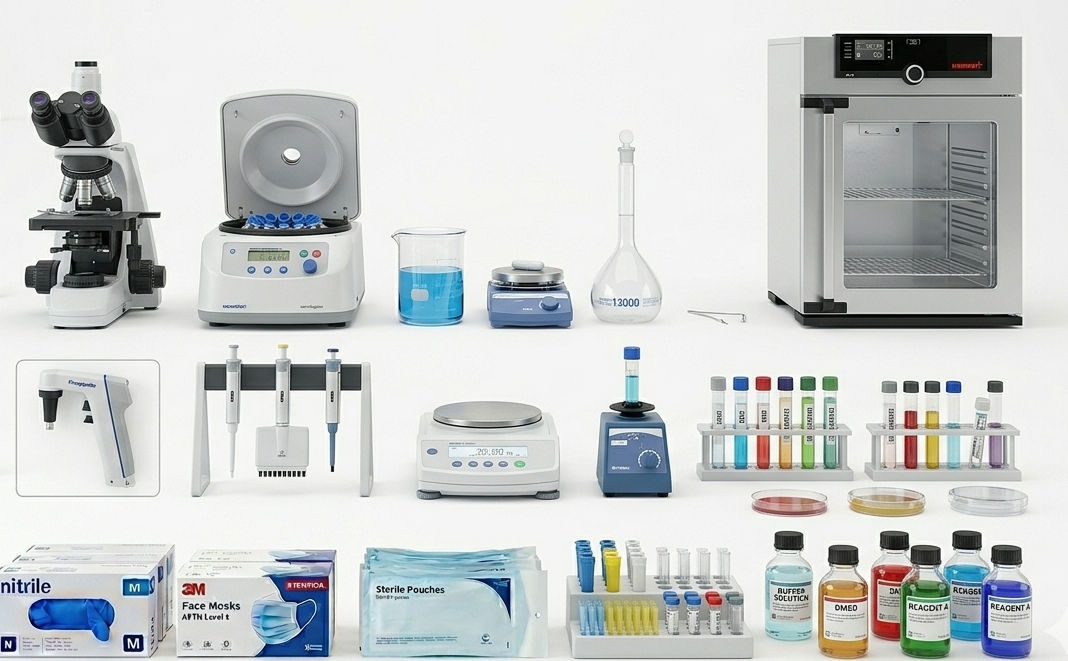
Laboratory Starter Kits in Kenya: Essential Equipment, Costs & Setup Guide (2026)
Planning to set up a medical laboratory in Kenya? Essential kits, equipment lists, pricing and setup tips.
Setting up a medical laboratory requires more than purchasing a microscope and a few test kits. You need the right diagnostic equipment, laboratory furniture, consumables, safety supplies and qualified personnel to perform the tests you intend to offer.
For clinics, health centres and private diagnostic facilities in Kenya, a well-planned starter laboratory can begin with routine tests and expand as demand grows. The key is to select equipment based on your test menu, available space, budget and applicable regulatory requirements.
1. Essential Medical Laboratory Equipment
The equipment you need depends on the investigations your laboratory will perform. Common items include:
Laboratory microscope: Used for examining blood films, urine deposits, stool specimens and other suitable preparations.
Laboratory centrifuge: Separates components of blood and other specimens when required by the testing procedure.
Micropipettes and pipette tips: Support accurate measurement and transfer of small liquid volumes.
Haematology analyser: Performs blood cell counts and related measurements, depending on the analyser's capabilities.
Biochemistry analyser: Measures selected chemical components in specimens, such as glucose, liver-function and kidney-function markers.
Glucometer: Measures blood glucose using compatible test strips.
Laboratory refrigerator: Provides controlled storage for specified reagents, controls and specimens that require refrigeration.
Autoclave: Sterilises compatible materials and may be used for appropriate decontamination processes, following applicable procedures.
Incubator: Supports specified microbiological applications where controlled-temperature incubation is required.
Not every laboratory needs every instrument on day one. For example, a facility offering basic microscopy and selected rapid tests may not initially require a full blood count or biochemistry analyser.
2. Laboratory Consumables and Starter Supplies
Consumables are essential because equipment cannot operate effectively without the correct supplies.
Category
Examples
Purpose
Sample collection
Vacutainer tubes, needles, lancets, specimen containers
Collecting and handling specimens
Microscopy
Slides, cover slips, immersion oil
Preparing and examining specimens
Pipetting
Micropipettes and compatible tips
Measuring and transferring liquids
Rapid diagnostics
Appropriate malaria, pregnancy and other authorised test kits
Performing specific rapid tests
Reagents and controls
Test-specific reagents, calibrators and quality-control materials
Supporting testing and result reliability
Personal protective equipment
Gloves, laboratory coats and eye protection where required
Protecting staff
Waste management
Sharps containers, labelled waste bins and approved disposal arrangements
Safe handling of laboratory waste
Cleaning and disinfection
Suitable laboratory cleaning and disinfecting products
Maintaining a clean work environment
Purchase reagents and consumables that are compatible with your equipment and intended tests. Check expiry dates, storage conditions, lot numbers and the availability of replenishment supplies before placing bulk orders.
3. Laboratory Starter Kit Prices in Kenya (2026)
The cost of setting up a laboratory varies considerably depending on the test menu, equipment capacity, automation level, consumables and facility requirements.
The following table provides indicative equipment prices based on published Kenyan supplier listings. They are planning estimates, not a quotation from Zanmed Medical Supplies Ltd.
Equipment
Indicative price (KSh)
Basic laboratory microscope
25,000–60,000
Small laboratory centrifuge
8,000–35,000
Micropipette set
6,500–18,000+
Semi-automatic biochemistry analyser
180,000–290,000
Three-part haematology analyser
280,000–650,000
Laboratory autoclave
20,000–55,000
Initial consumables and sample collection supplies
15,000–40,000+
Basic safety and waste-management supplies
5,000–15,000+
Prices vary by manufacturer, specification, warranty, installation and supplier. Some instruments require additional accessories, calibration, training or ongoing service contracts.
What Is the Total Setup Cost?
As a broad planning guide, a basic testing setup using selected rapid tests and microscopy may require around KSh 80,000–150,000 or more for equipment and initial supplies, depending on its scope.
A laboratory adding automated haematology and biochemistry testing may require several hundred thousand shillings or more. A comprehensive diagnostic laboratory can require a substantially larger investment.
These estimates do not necessarily include premises, renovations, laboratory benches, sinks, utilities, staff salaries, licensing, waste-management contracts, quality assurance or working capital. Obtain a detailed quotation against your planned test menu before committing your budget.
4. Plan Your Equipment Around the Tests You Will Offer
One of the most effective ways to control setup costs is to identify the intended tests before buying equipment.
Basic microscopy and selected rapid tests: Depending on the authorised test menu, equipment may include a microscope, suitable centrifuge, pipettes, sample collection supplies, rapid diagnostic kits and safety materials.
Haematology testing: A full blood count service requires a suitable haematology analyser, compatible reagents, controls, appropriate blood collection tubes and procedures for quality assurance.
Biochemistry testing: Tests such as selected liver-function, kidney-function and glucose investigations may require a biochemistry analyser, compatible reagents, sample-processing equipment and quality-control materials.
Microbiology and culture: Culture work requires additional equipment, appropriate media, controlled incubation, suitable infection-prevention measures and validated procedures. It should not be added simply because an incubator or autoclave is available.
The equipment list should follow the actual test menu and applicable laboratory classification requirements—not the other way around.
5. Laboratory Layout, Safety and Quality Control
A suitable laboratory needs more than equipment arranged on benches. Plan for specimen reception, sample processing, testing, storage, cleaning and waste handling in a way that supports safe workflow.
Before purchasing equipment, consider:
Adequate work surfaces, lighting, ventilation and access to handwashing facilities.
Reliable electricity and any backup power needed for critical equipment.
Suitable storage conditions for reagents and specimens.
Safe separation and disposal of sharps and infectious waste.
Appropriate personal protective equipment and written procedures.
Equipment maintenance, calibration and quality-control arrangements.
Staff training and access to technical support.
Quality assurance should be planned from the beginning. Internal quality control, appropriate external quality assessment where applicable, equipment maintenance and documentation help support reliable results.
6. Licensing and Regulatory Requirements in Kenya
Before establishing or operating a medical laboratory, confirm the applicable registration, inspection, staffing and facility requirements with the Kenya Medical Laboratory Technicians and Technologists Board (KMLTTB) and other relevant authorities.
KMLTTB provides requirements and application information for medical laboratory registration. These include documentation relating to the laboratory, its test menu, equipment, qualified personnel and waste-management arrangements. Requirements depend on the type and classification of the facility.
Do not assume that buying a starter kit automatically authorises you to conduct diagnostic tests. Confirm the requirements that apply to your proposed location and services before opening.
7. How to Choose a Reliable Laboratory Equipment Supplier
When comparing suppliers in Kenya, consider the full cost of owning and operating the equipment.
Equipment suitability: Ensure the specifications match the intended tests and expected workload.
Reagent availability: Confirm that compatible reagents, controls and consumables can be replenished reliably.
Warranty and servicing: Ask about installation, training, maintenance and access to spare parts.
Quality documentation: Request relevant manuals, product documentation and calibration or performance information.
Transparent pricing: Confirm whether VAT, accessories, installation and training are included in the quotation.
A low purchase price may not represent good value if the equipment is difficult to maintain or its consumables are expensive or unavailable.
Where to Buy Laboratory Equipment in Kenya
Zanmed Medical Supplies Ltd supplies medical and laboratory equipment and consumables for healthcare facilities across Kenya.
If you are planning a new laboratory, contact Zanmed to enquire about available microscopes, centrifuges, diagnostic equipment, reagents and essential laboratory supplies.
For a more accurate quotation, share your intended test menu, facility type, estimated daily sample volume and budget. This helps identify equipment that fits your needs rather than purchasing unnecessary instruments.
Frequently Asked Questions
How much does it cost to start a medical laboratory in Kenya?
The cost depends on the test menu and facility requirements. A basic setup using selected rapid tests and microscopy may begin around KSh 80,000–150,000 or more for equipment and opening supplies, while analyser-based laboratories require a much larger budget.
What equipment does a small clinic laboratory need?
Depending on the tests offered, it may need a microscope, suitable centrifuge, pipettes, sample collection supplies, rapid test kits, safety equipment and appropriate storage. Additional analysers are required for services such as full blood counts and automated biochemistry testing.
Do I need a haematology analyser when opening a laboratory?
Not necessarily. It is needed if your intended service includes the blood counts supported by that analyser. Base the decision on your authorised test menu, expected demand and the cost of reagents and maintenance.
Can I buy all laboratory supplies in one package?
Some suppliers offer starter packages, but confirm the contents carefully. A package should match your intended tests, equipment compatibility, storage requirements and applicable regulatory requirements.
Conclusion
A successful laboratory setup begins with a clear test menu, a realistic budget and a plan for quality, safety and regulatory compliance. Start with the equipment needed for your intended services, account for ongoing consumables and maintenance, and expand as demand justifies the investment.
For laboratory starter kits, diagnostic equipment and consumables in Kenya, contact Zanmed Medical Supplies Ltd to discuss your requirements and request a quotation.