
Best Hospital Beds for Home Use in Kenya: Types, Prices & Buying Guide (2026)
Types, features and prices to help you choose a medical bed for comfort and recovery at home.
Best Hospital Beds for Home Use in Kenya: Types, Prices & Buying Guide (2026)
Types, features and prices to help you choose a medical bed for comfort and recovery at home.
Choosing the right hospital bed can make home care more comfortable for patients and more manageable for caregivers. Whether a loved one is recovering from surgery, living with limited mobility or requires long-term assistance, an adjustable medical bed can support daily activities such as eating, resting and changing position.
In Kenya, hospital beds range from basic manual models to advanced electric beds. Understanding the differences can help you select a suitable option without spending more than necessary.
1. Types of Hospital Beds for Home Use
Single-Crank Manual Hospital Bed
A single-crank bed allows the caregiver to raise and lower the backrest manually. This helps the patient sit upright for meals, reading and routine care.
Best for: Short-term recovery and patients who need occasional backrest adjustment.
Its main advantage is affordability and independence from electricity. However, it offers fewer positioning options than multi-crank beds.
Two-Crank Manual Hospital Bed
A two-crank manual bed typically allows separate adjustment of the backrest and leg section, depending on the model. These adjustments can improve comfort during rest, feeding and everyday care.
Best for: Families seeking a practical, adjustable bed for regular home care.
It is a useful middle ground between a basic single-crank bed and more advanced models. The caregiver operates the adjustments using hand cranks, so consider how frequently the patient's position needs to change.
Three-Crank Manual Hospital Bed
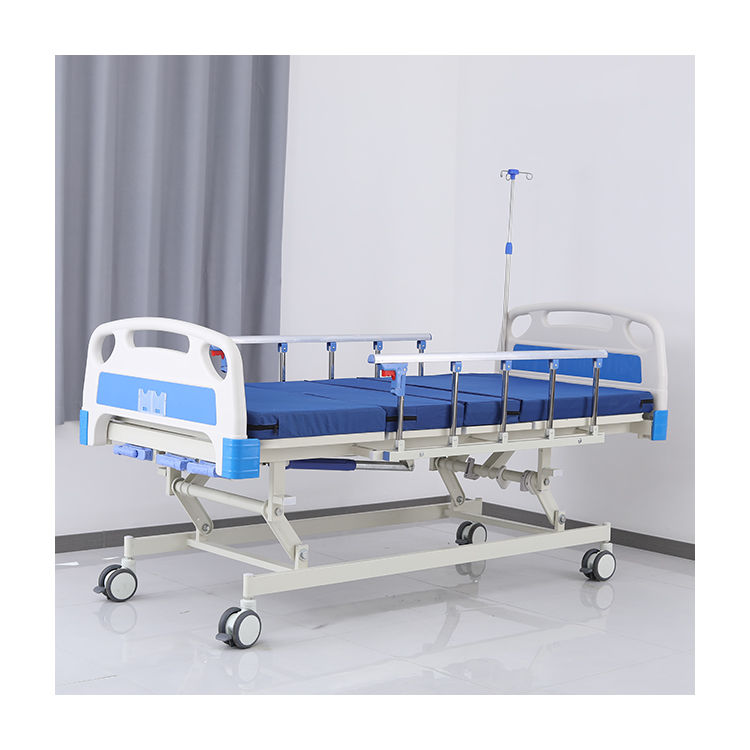
A three-crank bed commonly provides backrest adjustment, leg-section adjustment and overall bed-height adjustment. The height function can help caregivers position the bed for care tasks and patient transfers.
Best for: Patients who need frequent repositioning and caregivers who require greater flexibility.
These beds generally cost more than simpler manual models. Confirm the exact functions, since configurations can vary between manufacturers.
Electric Hospital Bed
Electric hospital beds use a powered handset to adjust selected sections of the bed. Depending on the model, functions may include backrest, leg-section and overall height adjustment.
Best for: Patients who need frequent positioning changes, particularly where caregivers would otherwise have to operate manual cranks repeatedly.
Electric models offer convenience but usually cost more and require a suitable power supply. Ask whether the model includes a backup battery or manual override if power is interrupted.
2. Hospital Bed Prices in Kenya (2026)
The table below gives indicative prices based on published Kenyan supplier listings. These are market estimates, not confirmed prices from Zanmed Medical Supplies Ltd.
Hospital bed type
Indicative price (KSh)
Single-crank manual bed
20,000–35,000
Two-crank manual bed
30,000–46,000
Three-crank manual bed
65,000–110,000
Three-function electric bed
120,000–165,000
Five-function electric or ICU-style bed
180,000–320,000
Prices vary with construction, adjustment mechanisms, side rails, weight capacity, warranty and included accessories. Some listings include a mattress while others sell it separately. Always request a complete quotation and confirm what is included before ordering.
3. What Features Should You Look For?
Before purchasing a hospital bed for home use, consider these important features.
Adjustable backrest: Helps patients sit upright for meals, reading and daily activities.
Leg-section adjustment: Provides additional positioning options where supported by the model.
Safety side rails: Can assist with positioning and reducing falls in appropriate circumstances. Rails must be selected and used carefully because gaps can create entrapment risks.
Lockable castors: Allow the bed to be moved when necessary and secured during use.
Strong frame and suitable weight capacity: Check the manufacturer's stated safe working load and ensure it accommodates the patient.
Easy-to-clean surfaces: Smooth, durable surfaces and a suitable mattress cover make routine cleaning easier.
Mattress compatibility: Confirm the mattress dimensions and whether it is included. Patients who spend prolonged periods in bed may need a pressure-redistributing mattress based on their individual risk.
4. Do You Need a Hospital Mattress or a Ripple Mattress?
The mattress is an important part of the home care setup.
A standard hospital foam mattress may suit patients who can change position independently and do not require specialised pressure management.
An alternating-pressure ripple mattress uses air cells and a pump to change pressure distribution. It may be appropriate for some patients with limited mobility or an increased risk of pressure injuries.
A ripple mattress does not eliminate the need for regular repositioning, skin inspection and professional care advice. Ask a healthcare professional to help determine the most suitable option.
5. How to Choose the Best Bed for Your Needs
Use the patient's daily care requirements to guide your decision.
Occasional assistance during recovery: A single-crank bed may provide sufficient backrest adjustment.
Regular home care: A two-crank bed offers additional positioning options without requiring electricity.
Frequent care and transfers: A three-crank bed may be useful when bed-height adjustment is needed.
Frequent repositioning with less manual effort: Consider an electric bed if the budget and home setup allow it.
Also measure doorways, corridors and the intended room before ordering. Allow enough space for the caregiver to work safely and for mobility equipment such as a wheelchair or bedside commode.
If the patient has complex mobility needs, a physiotherapist, occupational therapist or other qualified healthcare professional can help assess the safest bed and transfer arrangement.
6. Where to Buy Hospital Beds in Kenya
Zanmed Medical Supplies Ltd supplies medical equipment and home-based care products for individuals, families and healthcare facilities across Kenya.
If you are looking for a hospital bed for home use, contact Zanmed to enquire about available manual and electric models, current prices, mattress options and delivery arrangements.
When requesting a quotation, provide the patient's general care needs, preferred bed type and delivery location. Confirm the bed's adjustment functions, weight capacity, mattress inclusion, warranty and any assembly requirements before placing your order.
Frequently Asked Questions
What is the best hospital bed for home use in Kenya?
For many households, a two-crank manual bed is worth considering because it offers more positioning flexibility than a basic single-crank model without the cost and power requirements of an electric bed. The best choice depends on the patient's needs and the caregiver's capacity.
How much does a hospital bed cost in Kenya in 2026?
Indicative prices range from approximately KSh 20,000 for some basic manual beds to over KSh 300,000 for selected advanced electric or ICU-style beds.
Does a hospital bed come with a mattress?
It depends on the supplier and model. Confirm whether the mattress is included, its type and thickness, and whether a different mattress would be more appropriate for the patient.
Can I use an electric hospital bed during a power outage?
This depends on the model. Ask whether it has a backup battery or manual override and follow the manufacturer's instructions.
Conclusion
The best hospital bed for home use is one that meets the patient's positioning needs, supports safe caregiving and fits the available space and budget. Compare the bed's functions, safety features, mattress compatibility and after-sales support—not just its purchase price.
For hospital beds and home care medical supplies in Kenya, contact Zanmed Medical Supplies Ltd to enquire about current availability and pricing.